
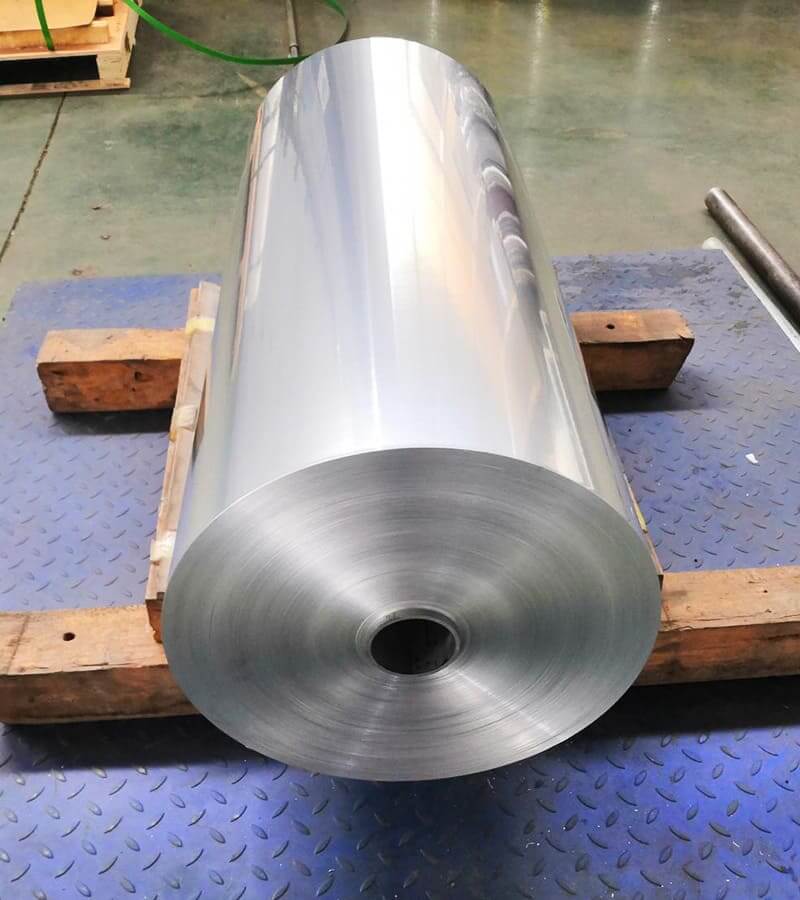
8021 Aluminum
| Parameter | Available Specifications |
|---|---|
| Alloy | 8021 |
| Temper | O, H14, H16, H18, H19, H22, H24 |
| Product Forms | Aluminum Foil, Coil, Strip, Sheet |
| Foil Thickness | Approximately 0.006–0.20 mm |
| Coil Inner Diameter | 76 mm, 152 mm, or customized |
| Surface Treatment | Laminating, Coating, Printing |
| Main Applications | Pharmaceutical Packaging, Alu-Alu Blister Foil, Cold Forming Foil, Battery Packaging |
What Is 8021 Aluminum?
8021 aluminum is an aluminum-iron alloy belonging to the 8000 series. It is widely used in pharmaceutical packaging, particularly in cold-forming aluminum foil for Alu-Alu blister packaging.
With its high formability, excellent barrier performance, and good surface quality, 8021 aluminum foil provides reliable protection for pharmaceutical products that require strict moisture, oxygen, and light barriers.
Compared with 8011 aluminum, which is commonly used for pharmaceutical PTP lidding foil, 8021 aluminum in the O temper offers excellent deep-drawing performance. It can withstand complex cold-forming operations while maintaining the integrity of the formed cavities.
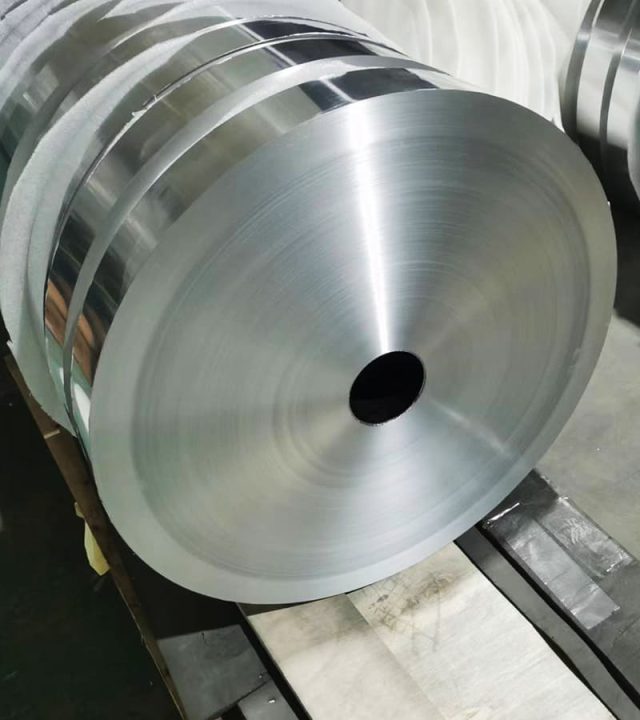
8021 Aluminum Chemical Composition (Max. wt.%)
| Element | Si | Fe | Cu | Mn | Mg | Zn | Ti | Other Elements (Each) | Other Elements (Total) | Al |
|---|---|---|---|---|---|---|---|---|---|---|
| Composition (wt.%) | ≤0.15 | 1.20–1.70 | ≤0.05 | ≤0.10 | ≤0.05 | ≤0.10 | ≤0.05 | ≤0.05 | ≤0.15 | Balance |
8021 Aluminum Physical Properties
Density
2.71 g/cm³
Melting Range
640–660 °C
Thermal Conductivity
200–220 W/(m·K)
Elastic Modulus
69–70 GPa
Poisson's Ratio
0.33 —
Specific Heat Capacity
900 J/(kg·K)
Shear Modulus
25 GPa
Thermal Expansion
23–24 × 10⁻⁶/K
Get Your Free Consultation
Contact us for expert advice on 1060 Aluminum products, specifications, and applications. Share your requirements, and our team will provide a suitable solution and competitive quotation.
8021 Aluminum Mechanical Properties With Diffirent Tempers
| Alloy | Temper | Tensile Strength (MPa) | Yield Strength (MPa) | Elongation (%) | Hardness (HV) | Formability |
|---|---|---|---|---|---|---|
| 8021 | O | 70–100 | ≤ 40 | ≥ 25 | 20–30 | Excellent |
| 8021 | H14 | 150–180 | 120–150 | 4–8 | 40–50 | Good |
| 8021 | H16 | 180–210 | 150–180 | 2–6 | 50–60 | Moderate |
| 8021 | H18 | 200–240 | 180–220 | ≤ 3 | 60–70 | Limited |
| 8021 | H22 | 120–150 | 100–130 | 8–10 | 30–40 | Good |
| 8021 | H24 | 140–170 | 110–140 | 6–8 | 40–50 | Moderate to Good |
Key Properties of 8021 Aluminum
Excellent Deep-Drawing Performance
8021-O foil offers good elongation and ductility, allowing it to withstand substantial deformation with a lower risk of cracking during cold forming.
Excellent Barrier Protection
Aluminum foil effectively blocks light, moisture, and gases, helping protect sensitive products.
Balanced Mechanical Strength
Its controlled iron content helps maintain a balance between tensile strength and elongation, supporting forming and handling operations.
Good Surface Quality
Its smooth surface supports printing, coating, adhesive bonding, and lamination.
Fine Microstructure
Controlled alloy composition and processing help improve material uniformity and reduce pinhole defects in thin foil.
Reliable Processing Performance
8021 aluminum foil is suitable for rolling, annealing, slitting, deep drawing, and other converting processes.
Common Surface Treatment of 8021 Aluminum
Anodizing
Anodizing forms a protective oxide layer that improves corrosion resistance, surface hardness, and appearance. It is suitable for decorative and architectural applications.
Polishing
Polishing smooths the aluminum surface and creates a bright, clean finish. It is commonly used for decorative parts and reflective components.
Brushing
Brushing creates a uniform linear texture on the surface, providing a modern appearance while reducing the visibility of minor scratches and marks.
Coating
Coating adds a protective or decorative layer to improve weather resistance, corrosion protection, and color durability. Common options include PVDF and powder coating.
Embossing
Embossing creates a textured surface that improves appearance and surface durability while concealing minor imperfections.
Perforating
Perforating creates precisely arranged holes for ventilation, filtration, light transmission, and weight reduction.
Typical Applications of 8021 Aluminum
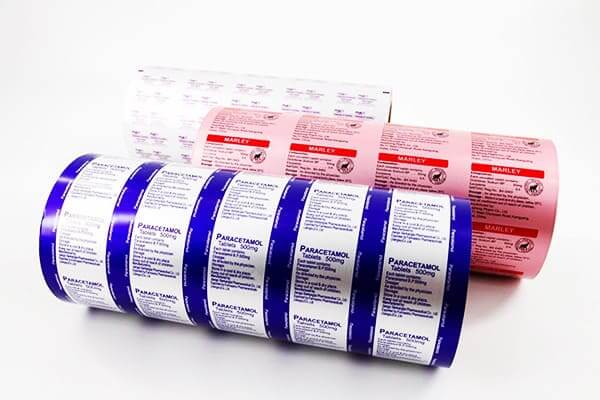
Alu-Alu Packaging
One of the most important applications of 8021 aluminum is Alu-Alu cold-forming pharmaceutical packaging. Manufacturers commonly use 8021-O foil as the aluminum barrier layer in multilayer laminates for tablets, capsules, and other solid medicines.
- Alu-Alu blister packaging
- Deep-drawn blister cavities
- Moisture-sensitive medicines
- High-barrier pharmaceutical packaging
Pharmaceutical and Medical Packaging
Beyond cold-forming blister packaging, 8021 aluminum can serve as a barrier material in selected pharmaceutical and medical packaging structures.
- Medicine packaging
- Health supplement packaging
- Medical diagnostic products
- Medical product pouches
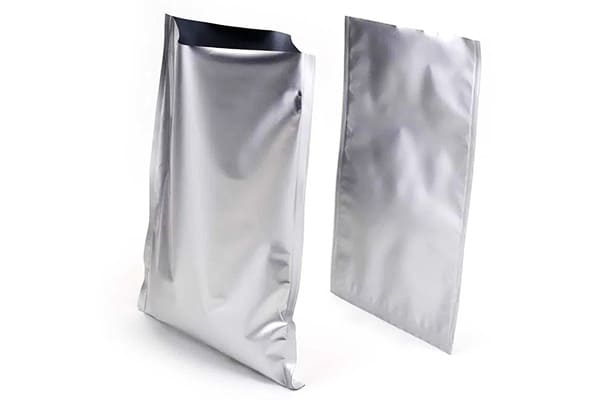
Lithium-Ion Battery Pouch Packaging
8021 aluminum foil is also used as the metallic barrier layer in certain aluminum-plastic composite films for lithium-ion pouch batteries.
- Lithium-ion battery pouch film
- Soft-pack battery casings
- Deep-drawn battery packaging
- Flexible battery packaging structures
High-Barrier Food Packaging
8021 aluminum foil can also be considered for selected high-barrier food packaging structures where product protection and material forming performance are important.
- Coffee and beverage powder packaging
- Snack and confectionery packaging
- Food ingredient pouches
- High-barrier flexible laminates
Cosmetic and Personal Care Packaging
Some cosmetic and personal care packaging products require effective protection against moisture, light, and external contaminants. 8021 aluminum foil can be used as a barrier layer in suitable laminated structures.
- Cosmetic sample sachets
- Skincare product packaging
- Personal care sachets
- Multilayer cosmetic tubes and pouches
Standards and Certifications
| Standard / Certification | Main Scope | Application to 8021 Aluminum |
|---|---|---|
| EN 573-3 | Chemical composition of aluminum alloys. | Verifies 8021 alloy composition. |
| EN 515 | Temper designation system. | Identifies tempers such as O and H conditions. |
| EN 546 Series | Aluminum foil specifications and testing. | Covers foil properties, dimensions, and tolerances. |
| ASTM B479 | Annealed aluminum foil for flexible barriers and packaging. | May apply when the alloy and product meet its scope. |
| GB/T 3198 | Aluminum and aluminum-alloy foil. | Provides requirements for foil production and inspection. |
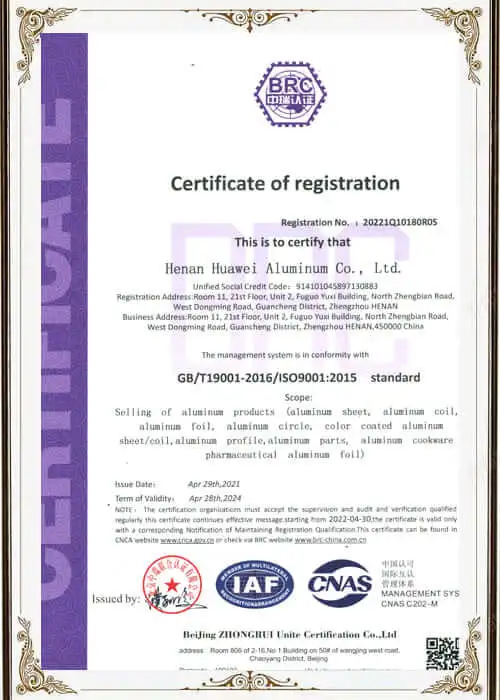
| ISO 9001 | Quality management systems. | Demonstrates the manufacturer’s quality management capability. |
| ISO 14001 | Environmental management systems. | Demonstrates environmental management practices. |
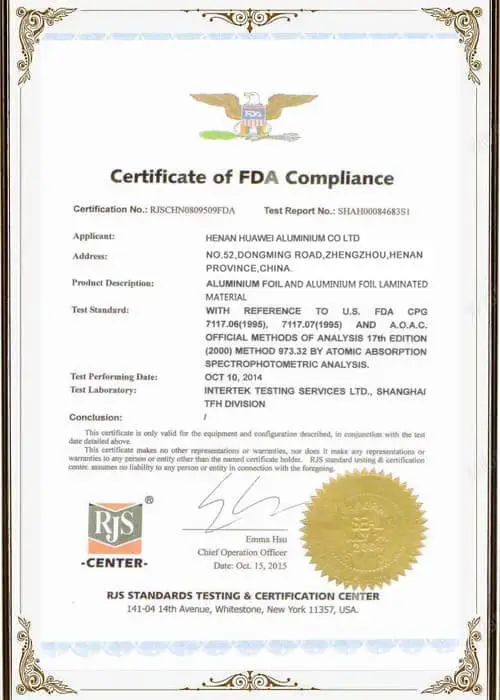
| FDA / EU Food Contact Requirements | Food-contact material safety. | Relevant to applicable food packaging structures. |
Reliable Aluminum Supply Backed by Quality & Expertise
From strict quality control to global export experience and professional technical support, Huawei Aluminum provides dependable solutions for customers worldwide.
Strict Quality Control
Huawei Aluminum checks chemical composition, dimensions, mechanical properties, and surface quality throughout production. ISO certification and third-party inspection are also available.
Global Export Experience
With more than 20 years of industry experience and products supplied to 72 countries, Huawei Aluminum supports reliable international supply and logistics.
Professional Technical Support
Our technical team provides guidance on alloy, temper, dimensions, surface finish, packaging, and application requirements to help customers select the right aluminum product.
8021 Aluminum vs Other Aluminum Alloys
| Comparison | 8021 Aluminum | 8011 Aluminum | 8079 Aluminum | 1235 Aluminum |
|---|---|---|---|---|
| Alloy Series | 8xxx | 8xxx | 8xxx | 1xxx |
| Si (wt.%) | ≤0.15 | 0.50–0.90 | 0.05–0.30 | Si + Fe ≤0.65 |
| Fe (wt.%) | 1.20–1.70 | 0.60–1.00 | 0.70–1.30 | Included in Si + Fe limit |
| Aluminum Content | Balance | Balance | Balance | ≥99.35% |
| Typical Temper | O | O / H18 | O | O / H18 |
| Tensile Strength (MPa) | ≥110 | 80–100 (O); ≥180 (H18) | 80–100 (O) | 60–80 (O) |
| Elongation (%) | ≥10 | ≥2 (O); ≥2 (H18) | ≥4 | ≥1 |
| Representative Thickness (mm) | 0.035–0.045 | 0.009–0.030 (O); 0.018–0.030 (H18) | 0.010 | 0.009–0.020 |
| Main Advantage | High ductility for deep drawing | Versatile strength and processing performance | Good flexibility and elongation | High purity and good ductility |
| Typical Applications | Alu-Alu cold-forming foil, battery pouch foil | PTP blister foil, bottle closures, packaging foil | Pharmaceutical foil, flexible packaging | Household foil, general packaging |
FAQs
8021 aluminum is mainly used to manufacture high-performance aluminum foil. Its major applications include Alu-Alu cold-forming pharmaceutical foil, selected medical and food packaging laminates, and aluminum barrier layers in lithium-ion battery pouch films.
Yes. 8021-O aluminum foil is widely used for Alu-Alu cold-forming blister packaging because its ductility and elongation support deep drawing and help reduce cracking during cavity formation.
8021-O is fully annealed, soft, and highly ductile, making it suitable for deep drawing. 8021-H18 is fully strain-hardened and has higher strength but lower elongation, so it is generally unsuitable for demanding deep-forming operations.
8021 aluminum is commonly selected for cold-forming applications that require high elongation and forming stability. 8011 aluminum is widely used for PTP blister lidding, household foil, and bottle-cap materials. The appropriate alloy depends on the packaging structure and processing requirements.
Yes. Aluminum foil provides an effective barrier against light, moisture, and gases. However, the overall barrier performance of a finished package also depends on foil thickness, pinhole quality, lamination, sealing, and packaging design.
Available thicknesses depend on the manufacturer, product form, and intended application. Buyers should specify the required gauge based on forming depth, barrier performance, and downstream processing conditions.
Buyers should provide the alloy and temper, thickness, width, coil dimensions, surface requirements, application, applicable standards, and required inspection documents. These details help the manufacturer prepare an accurate quotation and suitable production specification.
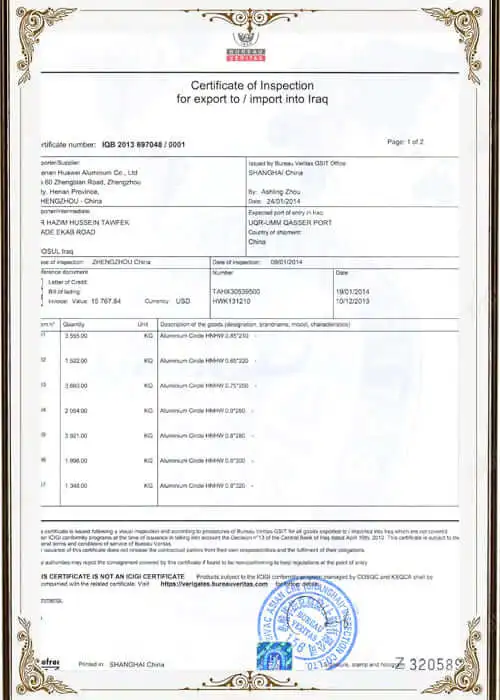
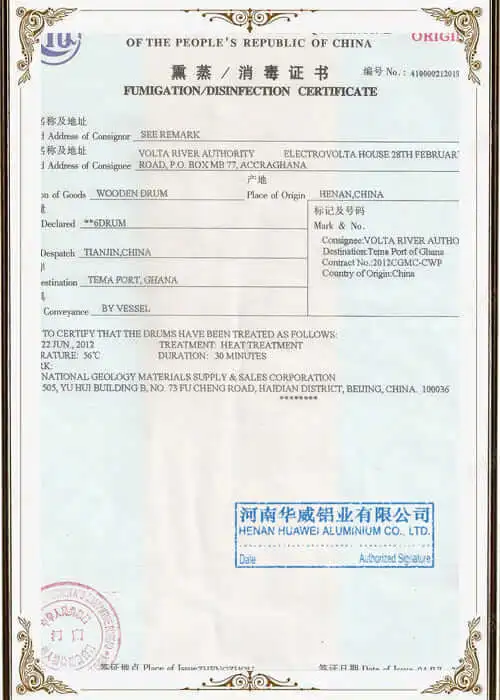
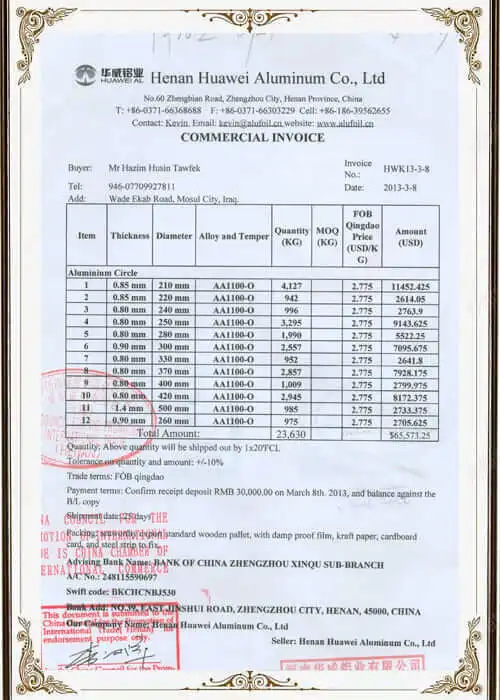
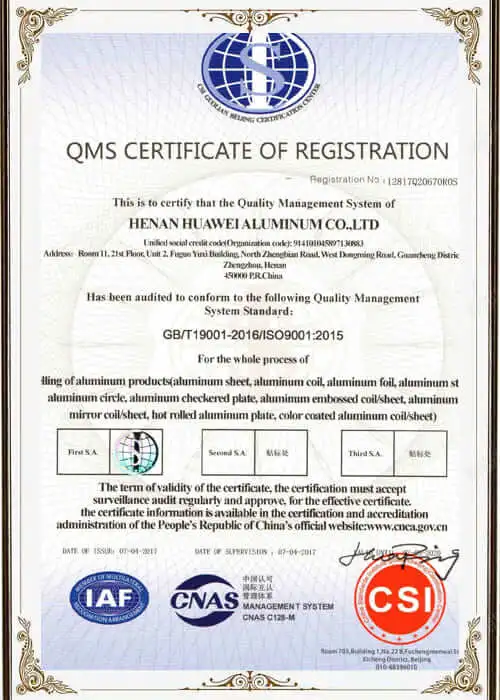
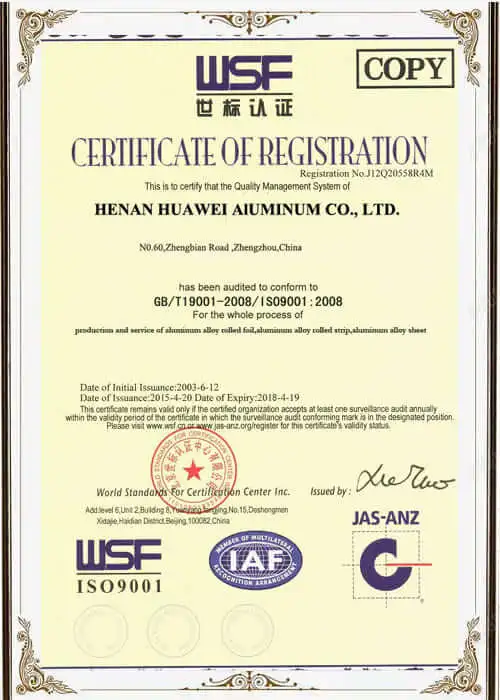
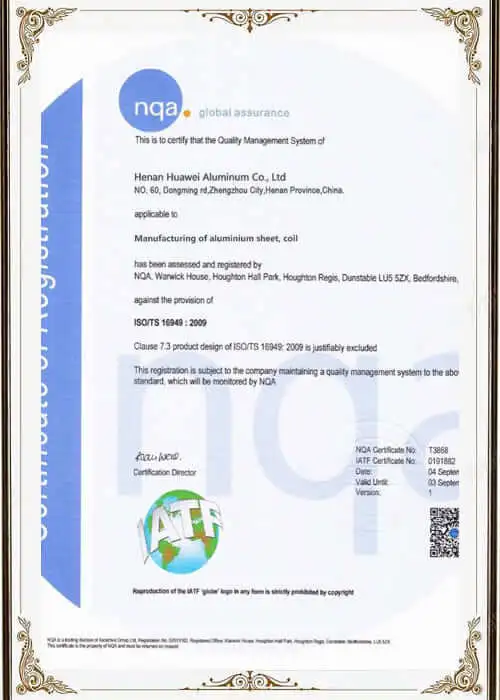
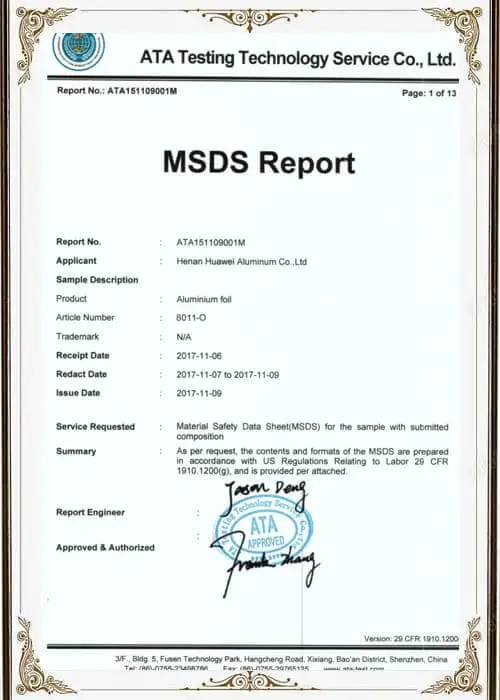
Certificates
Huawei Aluminum has been deeply involved in the rolled aluminum alloy industry for many years and has obtained a variety of certifications.
Get In Touch
- ADD: No.52, Dongming Road, Zhengzhou, Henan, China
- TEL: +86 18137782032
- Whatsapp: +8618137782032
- EMAIL: sales@hwalu.com

